

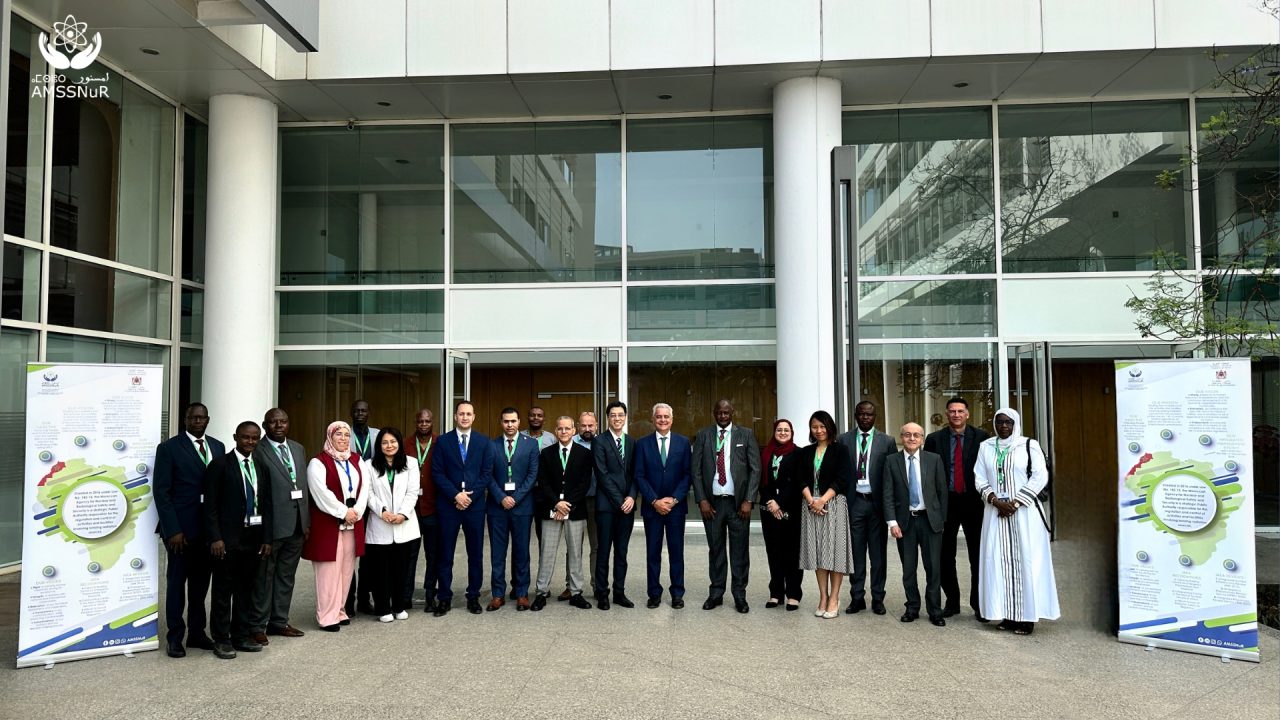
RABAT, Morocco – June 2, 2025 – Morocco’s commitment to nuclear safety and security leadership takes center stage this week as the Moroccan Agency for Nuclear and Radiological Safety and Security (AMSSNuR) hosts the 22nd Steering Committee meeting of the Forum of Nuclear Regulatory Bodies in Africa (FNRBA). This major event brings together the highest bodies of African regulatory authorities, as well as representatives from the IAEA, the European Commission (EC), the African Commission on Nuclear Energy (AFCONE), and other key organizations such as the French Nuclear Safety and Radiation Protection Authority (ASNR).
Supported by the International Atomic Energy Agency (IAEA), FNRBA serves as a vital regional network, established in 2009 and now encompassing the nuclear and radiological authorities of 34 African IAEA member states. The forum provides a platform for exchanging experiences, sharing best practices, and collectively strengthening regulatory capacities in alignment with stringent international standards.
The significance of the meeting was underscored in the opening address by Mr. Saïd MOULINE, Director General of AMSSNuR and current President of the Global Nuclear Safety and Security Network (GNSSN). He highlighted the critical timing of the discussions, set against a backdrop of rapidly evolving nuclear technologies, including the rise of Small Modular Reactors (SMRs), and the pressing challenges posed by climate change.
Mr. MOULINE emphasized the shared responsibility of African regulators. “As the use of ionizing radiation expands in key sectors such as health, industry, agriculture, research, and energy across our continent, our regulatory responsibility has never been more critical,” he stated. “This growth, while bringing substantial benefits, requires strong regulatory oversight, harmonized approaches, and sustained capacity building.”
He reiterated the imperative to ensure all nuclear and radiological applications on the continent are developed and utilized safely, securely, and in full compliance with international norms. Mr. MOULINE also showcased Morocco’s proactive stance, referencing the landmark adoption of Law No. 142-12 in 2014, which paved the way for AMSSNuR’s establishment in 2016. He outlined the agency’s strategic focus on modernizing regulatory processes through digitalization, enhancing competencies, fostering stakeholder communication, and rigorously aligning with IAEA standards – all reflecting a deep commitment to transparency, quality, and good governance.
Underscoring the power of collaboration, Mr. MOULINE pointed to AMSSNuR’s active participation in networks like FNRBA, GNSSN, and the Arab Network of Nuclear Regulators (ANNuR). The agency has also solidified over twenty bilateral cooperation agreements, positioning itself as a trusted partner for capacity-building efforts within Africa and globally. A tangible example cited was the launch in February 2025 of a major cooperation project under the European Commission’s Instrument for Nuclear Safety Cooperation (INSC), coordinated from Morocco to benefit FNRBA member states.
Addressing the specific needs of the region, Mr. Reda NOUR, Secretary General of AMSSNuR and the FNRBA Coordinator for North Africa, presented a comprehensive analysis of safety and security requirements for North African nations. Based on IAEA-compliant self-assessments, his presentation acknowledged significant progress made by countries like Morocco (AMSSNuR) and Egypt (ENRRA) in establishing robust regulatory frameworks, while also identifying persistent priorities. These include the ongoing need to strengthen regulatory infrastructure, continuously develop human capacity, and actively promote a pervasive culture of nuclear safety and security.
The four-day meeting features a comprehensive agenda. Participants will receive updates on collaborations with international partners, including the European Union, the US Department of Energy’s National Nuclear Security Administration (NNSA/US DoE), the Nuclear Energy Agency (NEA), the Heads of the European Radiological Protection Competent Authorities (HERCA), the International Commission on Radiological Protection (ICRP), and the GNSSN. Discussions will also cover IAEA regional assistance priorities, the progress of FNRBA’s thematic working groups, further analysis of regional needs, and the ongoing implementation of the forum’s strategic plan.